
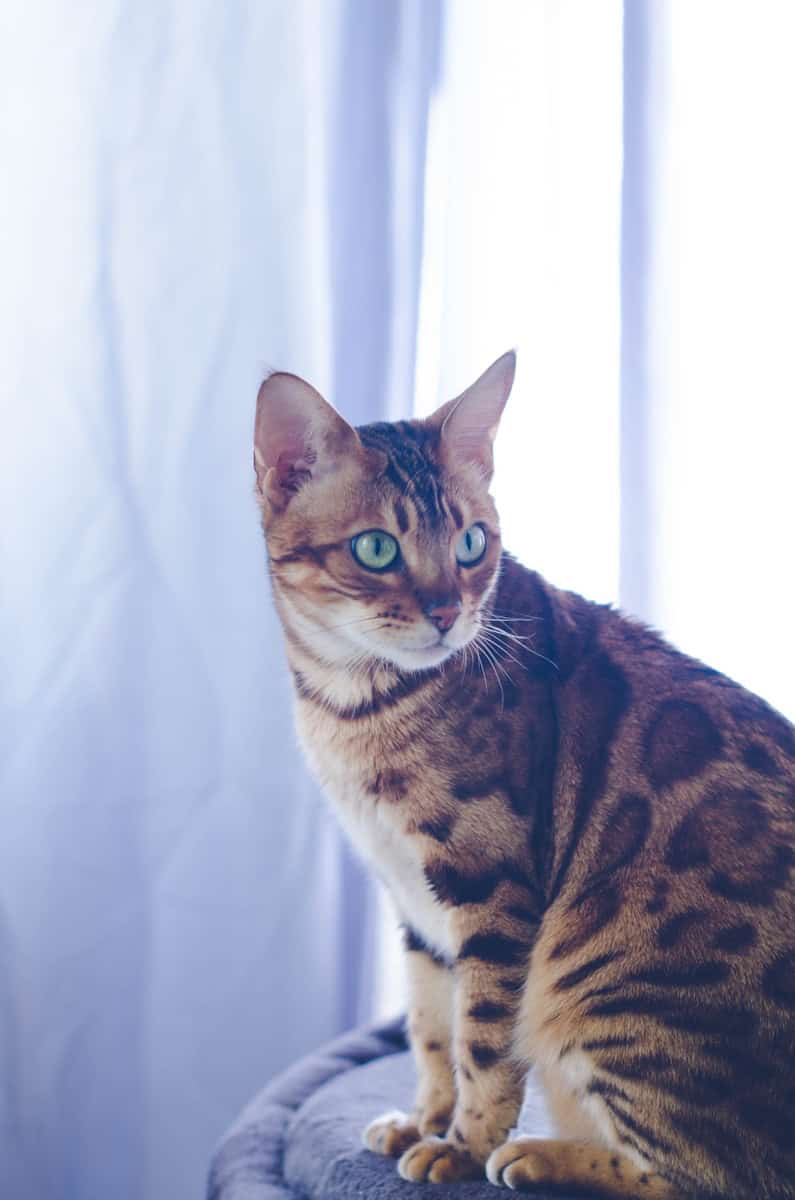
The Bengal cat, with its striking resemblance to a mini leopard, is a captivating breed born from a fascinating cross between a domestic shorthair and the Asian leopard cat. While their wild ancestry imbues them with a unique allure, it also means they are best suited for experienced cat parents who can cater to their distinct needs. Before bringing one of these exotic felines into your home, it’s crucial to be aware of local and state regulations, as some areas have restrictions on Bengal cat ownership, particularly for lower generations.
Understanding Bengal Cat Generations and Temperament
Bengal cats are categorized by their filial rating, denoted by an “F” followed by a number, indicating their generational distance from their wild Asian leopard cat ancestors. An F1 Bengal is a direct cross between a wild leopard cat and a domestic cat, representing a “low” generation. As the generations progress (F2, F3, and so on), the cats become more domesticated in personality and appearance, though they retain their distinctive spotted coats. Dr. Jennifer Frione, owner of Lakeside Animal Hospital, recommends considering higher-generation Bengals (F2 and beyond) as they tend to be more akin to domestic cats in temperament, while F1 Bengals are closest to their wild ancestors and may not be suitable for many households.
Bengals are far from sedentary; they are highly active and athletic cats that require significant mental and physical stimulation. Their energetic nature and strong hunting instincts mean they may not be the best fit for homes with very young children or timid pets. It’s important to provide an enriching environment that satisfies their need for activity and exploration.
Potential Health Concerns in Bengal Cats
The average lifespan of A Bengal Cat is between 12 and 16 years. While generally a healthy breed, they can be predisposed to certain genetic health conditions. Prospective owners may want to consider pet insurance to help manage potential veterinary costs.
Common Health Issues:
- Lymphoma: Bengal cats have a higher likelihood of developing lymphoma, a cancer of the lymphatic system. Prompt veterinary diagnosis and treatment, which may include chemotherapy, surgery, or radiation, are crucial.
- Gastrointestinal Conditions: Beyond lymphoma, Bengals can be prone to gastrointestinal upset, possibly due to their curious nature leading them to ingest non-food items. Irritable bowel disease can also be a factor. Any unusual digestive issues warrant a veterinary examination.
- Patellar Luxation: Their athleticism can sometimes be hampered by knee issues. Patellar luxation occurs when the kneecap dislocates. Treatment may involve medication or surgery to prevent discomfort and arthritis.
- Hypertrophic Cardiomyopathy (HCM): This common heart condition involves thickening of the heart muscle. Responsible breeders should genetically test breeding cats for HCM. Regular veterinary check-ups are vital for early detection, as symptoms aren’t always obvious.
- Progressive Retinal Atrophy (PRA): This genetic condition causes deterioration of the retina, leading to blindness. There is no cure, but affected cats can adapt with support. Ethical breeders test for PRA, which can manifest in kittens or later in life, with night blindness being an initial symptom.
- Pyruvate Kinase Deficiency (PKD): This genetic disorder affects red blood cells, leading to anemia. Genetic testing is available for this condition, which helps reduce the risk in Bengal kittens.
Nutritional Needs and Feeding Practices for Bengals
Bengal cats do not require a specialized diet but thrive on high-quality commercial cat food that meets the nutritional standards set by the Association of American Feed Control Officials (AAFCO). Consulting with your veterinarian for personalized food recommendations is always advised. Some brands, like Royal Canin, offer breed-specific formulations that may be beneficial.
Feeding Strategies:
Given their natural hunting instincts, Bengals benefit from interactive feeding methods. Incorporating food puzzles and lick mats can engage their prey drive and provide mental stimulation during meal and snack times. Instead of free-feeding, offering multiple small meals throughout the day better mimics a cat’s natural feeding cycle and can help prevent obesity.
Portion Control:
The amount of food a Bengal cat needs depends on their age, activity level, and generation. Full-grown Bengal cats can range in weight from 8 to 15 pounds. Maintaining a lean physique is important, and your veterinarian can help determine the appropriate calorie intake. Overweight cats may require a specific diet plan or weight-management food.
Supplements:
For cats on a balanced AAFCO-compliant diet, additional supplements are usually unnecessary. However, if a Bengal has specific health issues, a veterinarian might recommend certain supplements to support their health. Always consult your vet before administering any supplements.
Behavior, Training, and Enrichment for Bengal Cats
Bengals are known for their high energy levels, curiosity, and intelligence. They require substantial enrichment to prevent boredom, which can lead to destructive behaviors.
Socialization and Environment:
While Bengals can coexist with dogs and other cats with proper introductions, their strong prey drive means they might not be suitable for homes with small, timid pets. They can adapt to both houses and apartments, provided there is ample vertical space for climbing and exploring. Cat trees, scratching posts, and wall shelves are excellent additions to their living environment.
Behavioral Traits:
Bengal kittens are particularly curious and prone to getting into things. Their intelligence often manifests in entertaining ways, such as a fascination with water and an ability to learn new tricks. Providing plenty of opportunities for play and exercise is key to managing their behavior.
Training Opportunities:
Many Bengal cats enjoy learning new commands and tricks. They are also often amenable to leash and harness training, allowing them to explore the outdoors safely. However, they should never be allowed to roam unsupervised outside due to their adventurous nature and potential for getting into trouble.
Engaging Activities:
- Indoor cat wheels and climbing structures
- Interactive play with toys and puzzles
- Foraging for treats
- Harness and leash walks
- Learning new tricks
- Playing fetch
- Sunbathing in a safe outdoor enclosure (catio)
Bengal Cat Grooming Essentials
Bengals possess a short, single-layered coat that feels silky smooth and often has a “glittering” appearance. They are low-shedding and require minimal grooming beyond standard cat care.
Coat and Skin Care:
Weekly brushing helps reduce shedding and prevent matting. Bengals generally do not need regular baths, although their love for water means they may occasionally join you in the shower or enjoy playing in shallow water.
Eye and Ear Care:
While their eyes typically don’t need special care, any changes in vision should be promptly reported to a veterinarian. Keeping their ears clean and dry, especially after bathing or swimming, can help prevent infections. Signs of ear infections include odor, discharge, and irritation.
Nail Trimming:
Regular nail trims, typically every month, are recommended to prevent overgrowth, which can cause discomfort and potential injury.
Final Considerations for Bengal Cat Owners
The Bengal cat is a unique and engaging breed for the right owner. Prospective adopters must research local laws regarding hybrid cats and understand that higher generations are generally more domesticated. Bengals require a commitment to providing ample exercise, mental stimulation, and a safe environment. By meeting their specific needs, you can enjoy a fulfilling companionship with these extraordinary felines.
Frequently Asked Questions:
- Are Bengal cats hypoallergenic? No cat breed is entirely hypoallergenic, as allergens are present in saliva and dander. However, Bengals’ low-shedding coats may be more tolerable for individuals with mild allergies.
- How much does a Bengal cat cost? Prices can range from $1,500 to $4,000, depending on the generation, in addition to ongoing costs for care and potential medical expenses.
- Are Bengal cats good house pets? Yes, for experienced owners seeking an energetic, intelligent, and visually stunning companion. Lower generations are typically larger and more energetic, while higher generations tend to be mellower.
- Are Bengal cats legal in the US? Legality varies by state. It is essential to check specific local regulations, as some states may prohibit ownership or have stipulations based on the cat’s generation.
