
Are you dreaming of a well-behaved dog but short on time? The idea of a dramatic transformation in just a couple of weeks is incredibly appealing. A 2 Week Dog Training program, often called a board-and-train or a doggy boot camp, promises to deliver fast results by immersing your canine companion in a structured, professional training environment. But what can you realistically expect from this intensive approach, and is it the right choice for you and your furry friend? This guide will break down everything you need to know about these accelerated training programs.
These intensive programs are about more than just teaching basic commands; they aim to establish a solid foundation for future learning and behavior. For many dog owners, this kick-start is precisely what they need to build a better relationship with their pet. For a deeper understanding of fundamental milestones, consider what it means for a dog to be fully accustomed to living indoors; this is often a core goal of initial training and is explored in detail in [what does house trained mean for a dog](https://dogcarestory.com/what-does-house-trained-mean-for-a-dog/). Let’s explore whether a two-week program can truly deliver the transformation you’re hoping for.
What is a 2 Week Dog Training Program?
A 2 week dog training program is a condensed, immersive course where a dog typically stays at a trainer’s facility. It’s an intensive “boot camp” experience designed to accelerate the learning process. Instead of one-hour classes once a week, your dog lives and breathes training 24/7 with a professional.
The core idea is to remove the dog from its usual environment, where bad habits may be ingrained, and place it in a controlled setting where every interaction is a learning opportunity. Trainers can manage the dog’s schedule, from potty breaks and feeding times to structured training sessions and socialization. This consistent, professional handling is the key to the rapid progress these programs advertise.
The Philosophy Behind Immersion Training
Immersion works because it provides constant reinforcement and consistency, two of the most critical elements of successful dog training. At home, our busy lives can lead to inconsistent commands and schedules. In a board-and-train program, the rules are the same every single day, with every single interaction, which helps dogs learn much faster.
“Think of it as a study abroad program for your dog,” notes Dr. Alistair Finch, a canine behavior specialist. “By changing the environment and providing constant, expert guidance, we can often break through learning plateaus and establish new behaviors more effectively than in short, intermittent sessions. The dog isn’t just learning commands; it’s learning a new way to live and interact.”
This structured approach is particularly effective for establishing foundational obedience and addressing specific behavioral issues that are difficult to manage in a home setting.
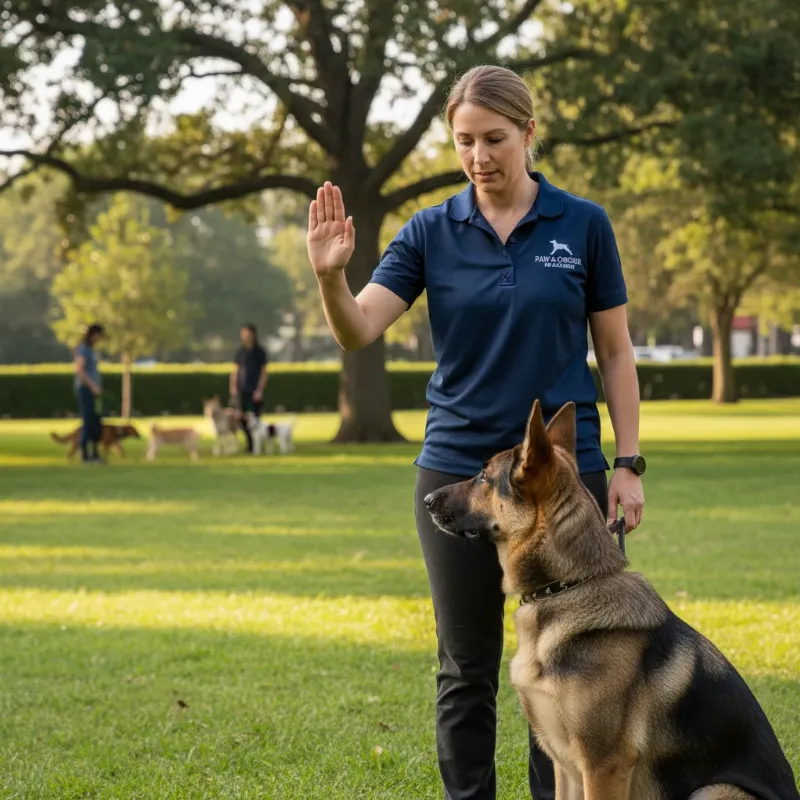 A well-behaved German Shepherd sitting patiently next to a professional trainer during a 2 week dog training session in a sunny park.
What Can a Dog Realistically Learn in Two Weeks?
While a two-week program won’t create a perfectly trained dog overnight, it can build an incredibly strong foundation. It’s about progress, not perfection. The specific outcomes depend on the dog’s age, temperament, and prior training, but here are some realistic goals.
Foundational Obedience Commands
Most programs focus on core commands that are essential for a well-behaved companion. These are the building blocks for all future training.
- Sit: The most basic command, used for impulse control.
- Stay: Teaching the dog to hold a position until released.
- Come: A reliable recall is crucial for safety.
- Down: A calming position that can be used in various situations.
- Place: Instructing a dog to go to a specific spot, like their bed, and stay there.
- Heel: Walking politely on a leash without pulling.
Key Behavioral Skills
Beyond commands, these programs work on instilling good manners and addressing common frustrations.
- Leash Manners: This is a big one for most owners. The goal is to achieve a loose-leash walk without constant pulling.
- Crate Training: Teaching the dog to see the crate as a safe, comfortable space rather than a punishment.
- Threshold Manners: Waiting politely at doorways instead of bolting through them.
- Greeting Manners: Discouraging jumping on people.
For owners looking to build on this foundation with more advanced or fun tricks, the principles learned can be applied to teach new skills later on. Once your dog masters the basics, you can move on to more complex behaviors, which is a process similar to [how to train a dog to roll over](https://dogcarestory.com/how-to-train-a-dog-to-roll-over/).
Pros and Cons of an Intensive Training Camp
A 2 week dog training boot camp can be a game-changer, but it’s not a magic wand. It’s important to weigh the benefits and drawbacks before making a decision.
The Advantages
- Professional Expertise: Your dog is learning from an experienced professional who understands canine behavior and learning theory.
- Consistency: The 24/7 structured environment provides a level of consistency that is difficult to achieve at home.
- Faster Results: The immersive nature of the program means dogs often learn much more quickly than they would in weekly classes.
- Behavioral Jump-Start: For dogs with specific issues like leash reactivity or resource guarding, a professional can safely manage and modify the behavior.
- Breaks for Owners: It gives owners a reset, especially if they are feeling overwhelmed or frustrated by their dog’s behavior.
The Disadvantages
- Cost: These programs are a significant financial investment, often costing thousands of dollars.
- Separation: Being away from your dog for two weeks can be emotionally difficult for both you and your pet.
- Lack of Regulation: The dog training industry is largely unregulated. It’s crucial to find a reputable trainer who uses positive, science-based methods.
- The Owner Learning Curve: The dog isn’t the only one who needs training. The biggest challenge is transferring the dog’s new skills back to the home environment. If the owner doesn’t learn the new cues and maintain consistency, the dog will likely regress.
Choosing the Right 2 Week Dog Training Program
Selecting the right program is the most critical step. A bad trainer can do more harm than good, creating fear and anxiety in your dog. Take your time and do thorough research. Different training philosophies exist, and finding one that aligns with your values, such as the methods used at [day hill dog training](https://dogcarestory.com/day-hill-dog-training/), is essential for a positive outcome.
Questions to Ask a Potential Trainer
- What training methods do you use? Look for trainers who use positive reinforcement. Be wary of those who talk about “alpha” or “dominance” theories or rely heavily on punishment-based tools like e-collars and prong collars.
- What are your credentials? Ask about certifications (like CPDT-KA), continuing education, and experience with your dog’s breed or specific behavioral issues.
- Can I see the facility? A reputable facility will be clean, safe, and happy to give you a tour.
- How will you keep me updated? Ask if they provide photo or video updates on your dog’s progress.
- What does the handover process look like? The program should include a comprehensive session (or multiple sessions) with you at the end to teach you everything your dog has learned and how to maintain it.
 A golden retriever wearing a small graduation cap, looking proudly at its owner who is kneeling and offering a treat after a 2 week dog training program.
The Critical Role of the Owner After Training
The success of a 2 week dog training program is ultimately determined by what happens when the dog comes home. The training is not done; it has just begun. The program creates a foundation, but it is the owner’s responsibility to build upon it.
Think of it this way: the trainer taught your dog a new language. Now, you have to learn that language and use it consistently. If you go back to the old ways of communicating, your dog will revert to its old behaviors. The trainer should provide you with a clear plan for continuing the training at home. You must be prepared to practice the commands, enforce the rules, and maintain the structure your dog learned. This follow-through is non-negotiable for long-term success, especially when dealing with breed-specific traits that might require a tailored approach, much like what is needed for [shih tzu dog training](https://dogcarestory.com/shih-tzu-dog-training/).
Frequently Asked Questions (FAQ)
Are 2 week board and train programs effective?
Yes, they can be highly effective for establishing a strong foundation of obedience and addressing specific behavioral issues. Their success depends heavily on the quality of the trainer and the owner’s commitment to continuing the training at home.
How much does a 2 week dog training camp cost?
The cost can vary significantly based on location, the trainer’s reputation, and the services included. Generally, you can expect to pay anywhere from $1,500 to $5,000 for a comprehensive two-week program.
What’s the difference between a 2-week and a 4-week program?
A 4-week program allows for more time to solidify behaviors and begin proofing them in different environments with more distractions. It’s often recommended for dogs with more significant behavioral challenges or for owners who want more advanced off-leash reliability.
Is my dog too old for a 2 week training program?
No dog is too old to learn! While puppies may pick things up faster, older dogs can absolutely benefit from a structured training program. The curriculum may be adjusted to suit the dog’s age, physical ability, and specific needs.
Will my dog forget me after two weeks?
No, your dog will not forget you. The bond between a dog and its owner is strong. While your dog will bond with the trainer, they will be overjoyed to see you at the end of the program.
Your Partner in Your Dog’s Journey
A 2 week dog training program can be an excellent investment in your relationship with your dog. It offers a powerful head start, providing you with a canine companion who understands basic commands and has better manners. However, it’s not a substitute for your involvement. The most important work begins when your dog comes home. By choosing a great trainer and committing to the follow-up, you can ensure that the results last a lifetime, creating a happier, more harmonious life for both of you.
