
Have you ever found yourself dreaming of a 2 Story Horse Trailer, a veritable palace on wheels for you and your equine companions? The term itself conjures images of ultimate luxury and convenience, a mobile home that perfectly marries your living space with your horses’ quarters. But as you begin your search, you might find the reality is a bit more complex. The idea of a trailer is central to any equestrian adventure; it’s not just a vehicle, it’s the opening scene, much like in a horse story trailer, setting the stage for the journey ahead. Let’s pull back the curtain on this fascinating concept and explore what a “two-story” trailer really means in the equestrian world.
The truth is, a literal, two-full-stories-high horse trailer for personal use is largely a myth. Due to road regulations, bridge clearances, and overall vehicle stability, stacking two full-height levels is simply not practical or safe for public highways. However, the search term’s popularity points to two very real, and very different, types of trailers that fulfill this larger-than-life dream: the commercial double-decker trailer and the luxury living quarters trailer with a loft. Understanding the difference is key to finding the right solution for your needs.
The Commercial Reality: Double-Decker Horse Trailers
When professionals in the equine industry talk about a two-level trailer, they are almost always referring to a double-decker or “pot” trailer. These are massive, semi-trailer units designed for commercial hauling, capable of transporting a large number of horses, often over long distances. They are the workhorses of the industry, used by professional rodeo stock contractors, large-scale breeding operations, and commercial horse transporters.
A double-decker trailer is engineered for maximum capacity. It features two distinct levels of stalls, one stacked on top of the other. Horses are loaded onto the different levels via complex internal and external ramp systems. The upper deck is typically accessed by a long, steep ramp, which requires horses to be calm, well-trained, and sure-footed.
Pros and Cons of Double-Decker Transport
The primary advantage of this design is efficiency. By hauling more horses in a single trip, commercial operations can significantly reduce fuel costs and travel time per animal. This is crucial for businesses where moving large herds is a regular occurrence.
However, the design is not without its controversies and drawbacks. Animal welfare advocates often raise serious concerns about the safety and comfort of horses in these trailers.
- Limited Headroom: The ceiling height on both levels is often restricted, which can prevent horses from holding their heads in a natural position. This can lead to stress, respiratory issues from poor drainage of airways, and an increased risk of injury.
- Steep Ramps: The ramps used to access the upper deck can be treacherous, increasing the risk of slips and falls, especially in poor weather conditions.
- Poor Ventilation: Airflow can be a major issue, particularly on the lower level, leading to overheating and the buildup of ammonia and pathogens.
- Accessibility in Emergencies: Reaching a horse in distress, especially one on the upper level in the middle of a packed trailer, can be nearly impossible.
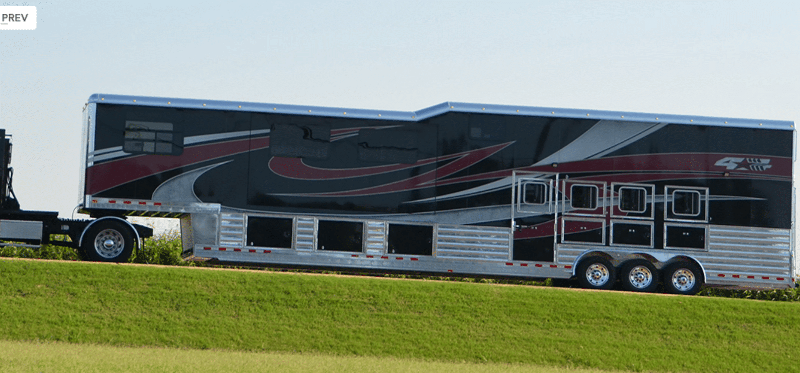 A large commercial double-decker 2 story horse trailer on a highway, designed for hauling multiple horses.
Due to these concerns, and the sheer scale of the vehicle, double-decker trailers are a specialized piece of equipment. They almost always require a commercial driver’s license (CDL) to operate and are subject to stringent department of transportation regulations. For the average horse owner, this type of 2 story horse trailer is neither practical nor desirable.
The Luxury Alternative: Trailers with Lofts and Living Quarters
For most equestrians, the dream of a 2 story horse trailer is actually the dream of a luxury gooseneck trailer with expansive living quarters and a loft. This is where the concept truly comes to life for personal use. These trailers offer a multi-level living experience that feels like a compact, two-story home, all while providing safe and comfortable transport for your horses.
The “second story” in this context is the raised section of the trailer that extends over the truck bed, known as the gooseneck. This area is ingeniously designed to house a private sleeping area, typically a queen or king-sized bed, creating a distinct bedroom loft. This clever use of space separates the sleeping area from the main living space below, providing the feel of a two-level floor plan. Every horse’s comfort on the road is part of their journey, and in a way, every horse has a story that is shaped by these experiences.
Features of a Luxury Living Quarters Trailer
Below the loft, the main floor of the living quarters can be customized with an incredible array of amenities, rivaling those of high-end RVs. Slide-outs—sections of the trailer that expand outwards when parked—dramatically increase the interior living space. Common features include:
- Full Kitchens: Equipped with a refrigerator, stovetop, microwave, and sink.
- Spacious Bathrooms: Complete with a toilet, shower, and vanity.
- Living Areas: Comfortable seating with sofas or dinettes, entertainment centers with TVs, and fireplaces.
- High-End Finishes: Hardwood cabinetry, leather upholstery, and designer fixtures.
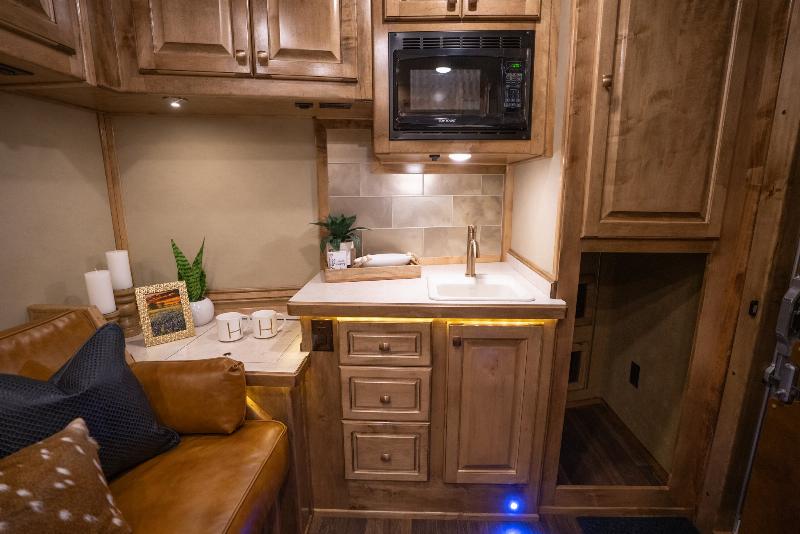 The luxurious interior of a 2 story horse trailer with a cozy loft sleeping area and a modern living space below.
This style of trailer provides the ultimate combination of convenience and comfort for competitors, trail riders, and anyone who spends significant time on the road with their horses. You have your own private, clean, and comfortable space at every event, saving on hotel costs and allowing you to stay close to your animals.
Key Considerations Before Buying a Large Trailer
Whether you’re considering a commercial-style hauler or a luxury living quarters model, purchasing a large horse trailer is a significant investment that requires careful planning.
Towing Vehicle Requirements
The single most important factor is having the right tow vehicle. These trailers are exceptionally heavy, and you’ll need a powerful truck to pull one safely. A one-ton dually (a truck with four wheels on the rear axle) is typically the minimum requirement for a large living quarters trailer or a multi-horse gooseneck. Always check the truck’s Gross Combined Weight Rating (GCWR) to ensure it can handle the combined weight of the truck, trailer, horses, and all your gear.
Licensing and Regulations
While most personal-use horse trailers don’t require a CDL, the rules can get blurry as trailers get bigger. Some states have special licensing requirements for non-commercial drivers pulling exceptionally heavy or long trailers. It’s crucial to research the laws in your state and any state you plan to travel through. Pay close attention to regulations regarding vehicle length, width, and weight.
The Financial Investment
A large living quarters trailer is a major purchase. New models can range from $80,000 to well over $300,000, depending on the size and level of customization. Even used trailers represent a substantial financial commitment. Beyond the purchase price, you must factor in the costs of insurance, maintenance, and the heavy-duty truck required to pull it.
Are Two-Level Trailers Safe for Horses?
Safety should always be the top priority. When it comes to the commercial double-deckers, the welfare concerns are significant and well-documented. The stress of loading, confined space, and poor air quality can take a toll on the animals. Regulations surrounding their use vary, with some jurisdictions imposing stricter rules than others. The focus on welfare is paramount; a stressful journey can impact a horse deeply, and understanding a particular mc horses story often starts with its travels.
In contrast, modern living quarters trailers are designed with horse safety and comfort at the forefront. Manufacturers use features like:
- Slant or Straight Load Stalls: Padded dividers and ample space.
- Excellent Ventilation: Multiple roof vents and large windows.
- Insulated Roofs: To keep the horse area cooler in the summer and warmer in the winter.
- Solid Flooring: With rubber mats for cushioning and traction.
- Rear and Side Ramps: With gentle inclines for easier loading and unloading.
When designed and maintained correctly, a luxury living quarters trailer provides a safe, comfortable, and low-stress environment for your horses.
Frequently Asked Questions (FAQ)
What exactly is a 2 story horse trailer?
For personal use, a “2 story horse trailer” typically refers to a luxury gooseneck trailer with a raised sleeping loft over the hitch, creating a two-level living space. In the commercial world, it refers to a double-decker semi-trailer designed to haul a large number of horses on two separate levels.
Are double-deck horse trailers legal?
Yes, double-deck horse trailers are legal for commercial transport in many places, but they are subject to federal and state transportation laws. There is ongoing debate and legislative effort by animal welfare groups to regulate or ban their use due to safety and welfare concerns.
How much does a luxury horse trailer with a loft cost?
The price varies widely based on size, brand, and custom features. A new, well-equipped living quarters trailer with a loft can cost anywhere from $80,000 to over $300,000. High-quality used models can often be found for a lower, but still significant, price.
What kind of truck do I need to pull a large horse trailer?
You will need a heavy-duty truck, at a minimum a three-quarter-ton (like a Ford F-250 or Ram 2500) for smaller goosenecks, but more commonly a one-ton dually (like a Ford F-350 or Ram 3500) is required for safety and stability when pulling a large and heavy living quarters trailer.
Are there alternatives to a double-decker for hauling many horses?
Yes, for hauling 6 to 9 horses without resorting to a double-decker, many people use large gooseneck trailers with extended horse compartments. These offer a safer, more comfortable single-level environment for the horses and are more manageable for non-commercial operators.
The Final Word on Your Dream Trailer
The search for the perfect 2 story horse trailer is a journey into the world of possibility, blending our passion for horses with our desire for comfort and convenience on the road. While a literal two-story building on wheels remains a fantasy, the dream is alive and well in the luxurious and cleverly designed living quarters trailers that grace showgrounds and trailheads everywhere. These rolling homes offer an unparalleled experience for the traveling equestrian.
Ultimately, choosing the right trailer is about balancing your needs, budget, and, most importantly, the safety and well-being of your horses. The bond we share with these animals is profound, a timeless narrative not unlike the horses of mcbride true story, and ensuring their comfort on every journey is a top priority. Whether you opt for a sprawling living quarters model or a more modest and practical design, the right trailer is the one that safely carries you and your best friend to your next adventure.
