
Bringing a new kitten into your home is an exciting milestone. A crucial aspect of kitten care revolves around their diet, as they require multiple feedings daily. Understanding how much to feed kittens and how often is paramount for their healthy growth and development.
Several factors influence a kitten’s dietary needs. This guide provides comprehensive information on feeding your new feline companion. Kittens are naturally curious, and their food preferences often mirror their mother’s. Introducing both wet and dry food around 5–6 weeks of age allows them to explore solid options at their own pace. If kittens are being bottle-fed, this is also the time to begin incorporating solid food into their diet. By this age, kittens should be able to manage their waste independently and typically start using a litter box around 3–4 weeks old. It’s advisable to use a non-clumping litter, such as Fresh Step Premium Scented Non-Clumping Cat Litter, initially. A transition to clumping litter, like Fresh Step Heavy Duty 30 Day Odor Control with Febreze Freshness Clumping Cat Litter, can be made when kittens are around 8–10 weeks old, offering effective odor control and easy scooping.
Kittens are generally ready for a complete solid food diet by 7–8 weeks of age. During the subsequent weeks, gradually increase the amount of solid food offered while reducing nursing time. Mothers may also instinctively withdraw from their kittens, encouraging this transition. You can further support this by reducing the frequency or amount of formula.
What to Feed Kittens
The choice between wet kitten food, dry kitten food, or a combination depends on your kitten’s preferences and desired health outcomes. Kittens often inherit dietary preferences from their mother, so the food she consumed during pregnancy and nursing can influence your kitten’s eating habits.
Wet vs. Dry Kitten Food
Both wet and dry kitten food offer distinct advantages:
Benefits of Wet Food for Kittens:
- High Moisture Content: Ensures adequate hydration for your kitten.
- Mixability: Ideal for incorporating supplements such as fish oil and probiotic powders.
- Enhanced Palatability: Warming wet food can increase its aroma, beneficial for kittens with nasal congestion or decreased appetite.
Benefits of Dry Food for Kittens:
- Dental Health Support: The abrasive texture of kibble helps scrape plaque and tartar from teeth as kittens chew.
- Mental and Physical Stimulation: Dry food can be used for training treats or placed in cat puzzle toys or food-dispensing toys for enrichment.
- Cost-Effectiveness: Dry food is often a more economical choice for pet owners.
The Best Kitten Foods
When selecting kitten food, consider reputable brands such as Purina, Hill’s, Royal Canin, or IAMS. These manufacturers invest in research and conduct feeding trials to validate their product claims.
Look for the Association of American Feed Control Officials (AAFCO) nutritional adequacy statement on the food label. This ensures the kitten diet is complete and balanced for their specific life stage. The best kitten foods feature appropriate protein and fat levels for growth, omega-3 fatty acids (EPA and DHA) for cognitive and visual development, and vitamins E and C for immune support. Your veterinarian can provide personalized recommendations for the best food for your kitten.
How Much to Feed Kittens
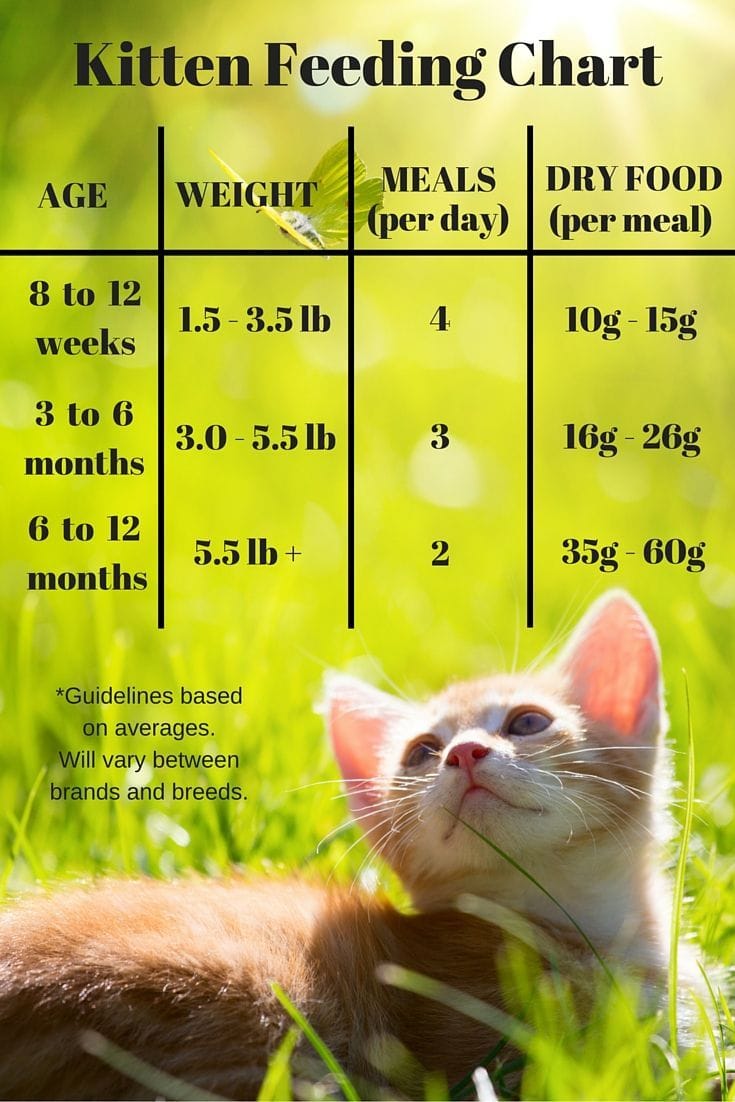
Determining the correct portion size depends on your kitten’s age and weight, which helps estimate their daily caloric needs. The feeding chart below provides a general guideline for caloric intake to support proper growth and development. Remember that the actual volume of food will vary based on the specific kitten food’s type (wet or dry) and calorie density.
For instance, Hill’s Science Diet Kitten Healthy Development Chicken Recipe Dry Cat Food contains 568 calories per cup, while Purina Pro Plan Kitten Shredded Blend Chicken & Rice Formula Dry Cat Food provides 409 calories per cup. Consequently, a 10-pound kitten would require approximately 1 cup of Hill’s food daily, compared to about 1⅓ cups of Purina Pro Plan to meet the same caloric target.
It’s important to note that breed and body frame can influence a kitten’s weight, so these figures serve as a general reference. Always consult your veterinarian to determine precise food portions for your kitten.
| Age | Weight | Average Caloric Intake | Frequency |
|---|---|---|---|
| 2 months | 2 pounds | 150 calories | Three meals/day |
| 3 months | 3 pounds | 200 calories | Three meals/day |
| 4 months | 4.5 pounds | 300 calories | Three meals/day |
| 5 months | 5.5 pounds | 340 calories | Two meals/day |
| 6 months | 6.5 pounds | 400 calories | Two meals/day |
| 7 months | 7 pounds | 420 calories | Two meals/day |
| 8 months | 7.5 pounds | 440 calories | Two meals/day |
| 9 months | 8 pounds | 460 calories | Two meals/day |
| 10 months | 9 pounds | 500 calories | Two meals/day |
| 11 months | 10 pounds | 540 calories | Two meals/day |
How Often to Feed Kittens
Kittens up to 4 months of age typically thrive on three meals per day. After four months, this can be reduced to two meals daily. Observe your kitten’s eating patterns; some may prefer to consume their entire daily calorie intake in one or two sittings, while others may benefit from smaller, more frequent meals.
How to Transition a Kitten to Adult Cat Food
Most kittens are ready to transition to adult cat food around 12 months of age. This transition is generally straightforward. Begin by replacing a small portion of your kitten’s current food with the new adult cat food. A common starting point is a 25% new diet to 75% old diet ratio. For example, if feeding 1 cup of dry kitten food, substitute ¼ cup with adult cat food and maintain this proportion for a few days.
Gradually increase the percentage of adult cat food every few days until your kitten is exclusively eating the adult diet, typically within about six days. For sensitive kittens, start with a 10% adult food ratio and increase in 10% increments, or extend the duration at each stage to allow for better adaptation to the new diet.
Consulting with your veterinarian is always recommended to ensure your kitten receives the most appropriate nutrition throughout their growth and development.
