
In the annals of modern warfare, few stories are as improbable and inspiring as that of the first U.S. Special Forces team to enter Afghanistan after the September 11th attacks. The Hollywood blockbuster 12 Strong brought this incredible mission to the big screen, but the real events are even more remarkable. This is 12 Strong The True Story Of The Horse Soldiers, a tale of courage, adaptation, and the unique fusion of 21st-century firepower with 19th-century tactics. This is a narrative that feels almost mythical, much like the enduring legends explored in the horse of troy story.
Who Were the Real Horse Soldiers?
The men at the heart of the story were a 12-man team of Green Berets, designated Operational Detachment Alpha (ODA) 595. In the chaotic days following 9/11, this seasoned unit was chosen for a mission critical to America’s response: to infiltrate northern Afghanistan, link up with local warlords, and dismantle the Taliban regime from within.
The team was led by Captain Mark Nutsch, who was renamed “Mitch Nelson” and portrayed by Chris Hemsworth in the film. Nutsch was a quiet professional who had actually been assigned to a staff job just before the attacks. He fought to get his command back, knowing his team was the right one for the job. His second-in-command was Chief Warrant Officer 5 Bob Pennington, another seasoned operator and a veteran of multiple conflicts. The men of ODA 595 were, on average, 32 years old; all but one were married, and ten were fathers. They were a mature, experienced team tasked with an unprecedented mission.
The Mission: Unconventional Warfare in Afghanistan
Codenamed Task Force Dagger, the objective was deceptively simple: connect with the Northern Alliance, a loose coalition of Afghan fighters opposed to the Taliban, and help them capture the strategic city of Mazar-i-Sharif. Taking this city was key to opening up a supply corridor from the north and breaking the Taliban’s grip on the country.
On October 19, 2001, ODA 595 was flown covertly by helicopter deep behind enemy lines into the Dari-a-Souf Valley. There, they met their primary ally, General Abdul Rashid Dostum, a powerful and mercurial Uzbek warlord who had been fighting the Taliban for years. The Green Berets’ task was to act as combat controllers, calling in devastatingly precise airstrikes from American B-52 bombers and other aircraft onto Taliban and al-Qaeda positions. They were a force multiplier, bringing the full might of U.S. airpower to support Dostum’s ground forces.
Why Horses? A Return to 19th-Century Tactics
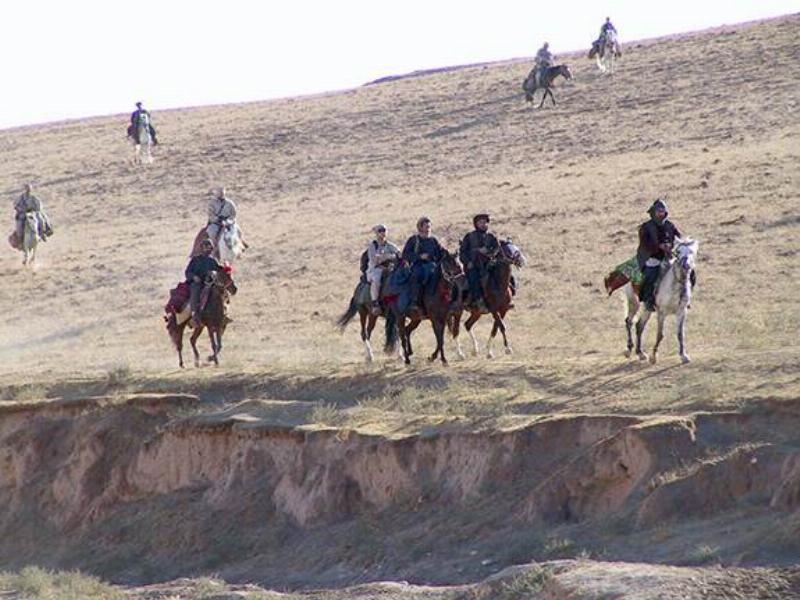
The single most iconic image from this mission is that of elite U.S. Special Forces soldiers on horseback. This was not a gimmick; it was a battlefield necessity. The terrain of northern Afghanistan is some of the most brutal and unforgiving on the planet. The steep, rocky mountains and narrow passes were completely inaccessible to modern military vehicles like Humvees or tanks. The only way to effectively navigate the landscape and keep pace with Dostum’s fighters was to do as they did: ride horses.
Most of the Green Berets had little to no riding experience. They learned on the job, using small, wooden saddles that were incredibly uncomfortable, especially with the weight of their military gear. They quickly had to master horsemanship while simultaneously managing communications equipment, spotting enemy targets, and coordinating air support.
According to Dr. David Sterling, a noted military historian, “The use of cavalry by ODA 595 wasn’t a step backward; it was a brilliant adaptation, blending 21st-century airpower with 19th-century mobility. It’s a textbook case of unconventional warfare, proving that the most effective tool is often the one that best fits the environment.”
Hollywood vs. Reality: What Did ’12 Strong’ Get Right?
While 12 Strong captures the spirit and core truths of the mission, it is a Hollywood dramatization. Understanding the differences highlights the nuances of the real story.
What the Movie Got Right
- The Core Mission: The film accurately portrays the team’s primary objective to link up with Dostum and capture Mazar-i-Sharif by coordinating massive airstrikes.
- The Use of Horses: The necessity of using horses due to the terrain is a central and factual element of the story.
- The Alliance with Dostum: The complicated but ultimately successful partnership with General Dostum was a critical aspect of the real mission.
- The David vs. Goliath Scenario: ODA 595 and their allies were indeed vastly outnumbered and outgunned by the Taliban’s tanks, artillery, and rockets, relying on airpower to even the odds.
What Was Dramatized
- Character Names: For security and personal reasons, most of the real soldiers’ names were changed for the film. Mark Nutsch became Mitch Nelson, for example.
- The Single Cavalry Charge: The movie culminates in a dramatic, large-scale cavalry charge against Taliban lines. While there were many intense firefights and movements on horseback, the real victory was achieved through a series of smaller, strategic engagements where airpower decimated enemy positions, followed by advances from Dostum’s forces.
- Team Cohesion: The film introduces some internal conflict for dramatic effect. In reality, ODA 595 was an incredibly cohesive and experienced team that had worked together for years.
- The “12 Men” Narrative: While the focus is on the 12 members of ODA 595, they were part of a larger effort involving other Special Forces teams, CIA operatives, and airmen who were all integral to the success of Task Force Dagger. To dive deeper into the official accounts, exploring the declassified story of the horse soldiers reveals even more fascinating details.
The Legacy of the Horse Soldiers
The mission of ODA 595 was a stunning success. Military planners had initially predicted it could take up to two years to achieve their objectives. Task Force Dagger did it in just three weeks. Mazar-i-Sharif fell on November 10, 2001, a swift and devastating blow that shattered Taliban morale and led to a cascade of victories for the Northern Alliance across the country.
The story of the Horse Soldiers remained classified for years. The men of ODA 595 returned home without fanfare or public recognition for their extraordinary achievement. Today, their bravery is immortalized by the America’s Response Monument, a 16-foot bronze statue of a Green Beret on horseback, which overlooks the 9/11 Memorial in New York City. It stands as a silent, powerful tribute to the first soldiers who took the fight to the enemy in the aftermath of the attacks. The bravery of these men is a powerful narrative, reminiscent of the personal accounts found in the 12 strong horse soldiers real story.
 A detailed shot of the America's Response Monument, which honors the '12 Strong' true story of the horse soldiers, located in New York City.
Frequently Asked Questions about the Horse Soldiers
How many soldiers were on the team?
The specific team at the center of the story, ODA 595, consisted of 12 Green Berets. However, they were part of a larger special operations mission, Task Force Dagger, which included other teams as well.
Did they really ride horses into battle?
Yes. The mountainous terrain of northern Afghanistan made motorized vehicles impractical. The team had to adopt the methods of their Afghan allies, using horses and mules to navigate the landscape and conduct their operations.
How accurate is the movie ’12 Strong’?
The movie is accurate in its broad strokes: a 12-man team did work with a local warlord to fight the Taliban on horseback by calling in airstrikes. However, many specific events, character names, and conversations were changed or created for dramatic effect.
Where is the Horse Soldier statue located?
The America’s Response Monument is located in Liberty Park, overlooking the National September 11 Memorial & Museum in New York City.
What was the official name of the Horse Soldiers’ mission?
The broader mission involving several Special Forces teams was codenamed Task Force Dagger. The specific team featured in the story was Operational Detachment Alpha (ODA) 595.
In conclusion, the 12 strong the true story of the horse soldiers is more than just a thrilling war story. It is a powerful testament to the ingenuity, adaptability, and sheer courage of the U.S. Army Special Forces. These 12 men, and their comrades, faced overwhelming odds and achieved a victory that reshaped the course of a war, all while riding into history on horseback.
